
Google Updates SiteMap Documentation With Last Modified
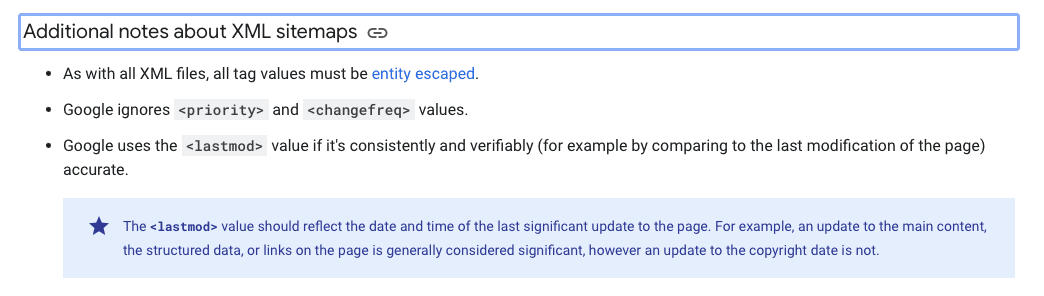
Google recently updated its sitemap documentation to clarify the usage of the lastmod date field.
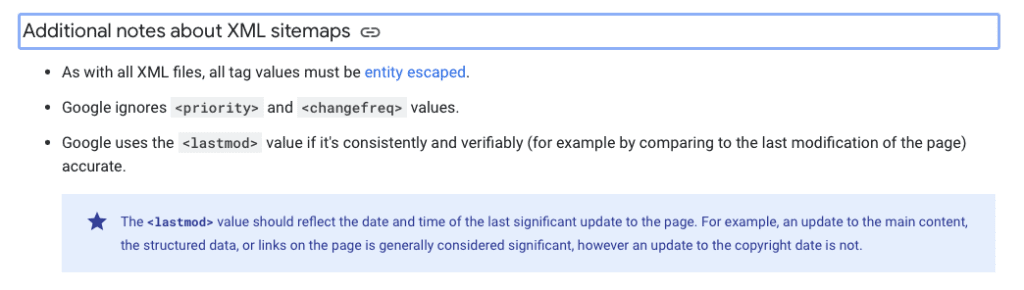
On 21 June 2024, the guidance was revised to state that the lastmod value “should reflect the date and time of the last significant update to the page”. This change follows discussions about Google’s trust in the lastmod field within sitemap files. The updated documentation provides examples of significant updates, such as changes to main content, structured data, or links on the page. Conversely, minor alterations like updating the copyright date are not considered significant.
WHAT GOOGLE SAYS ABOUT THE CHANGE
Not much. But it has previously. John Mueller, Google’s Search Advocate, had previously commented on this topic, stating, “For a sitemap file, any change in the page’s primary content is fine to flag – it’s purely about recrawling changes”. This aligns with the recent update, emphasising the importance of substantial content modifications. I did reach out for comment about what I have written below, but I did not receive a reply.
Gary Illyes, Google’s Webmaster Trends Analyst, has not made a public statement about this specific update. When I heard him speak at WebCertain’s 2023 SEO event in Barcelona, he stressed the importance of accurate sitemaps for efficient crawling and indexing.
WHAT EXPERTS SAY ABOUT THE CHANGE
Lily Ray, an SEO expert, had previously raised concerns about content management systems updating lastmod dates across many pages with minor changes. The new guidance appears to address these concerns by clarifying what constitutes a significant update.
Glen Gabe, another prominent SEO consultant, has not commented directly on this update (at the time of writing), but he has often emphasised the importance of technical SEO elements like sitemaps in his analyses.
WHAT ANTHONY LEATON SAYS ABOUT THE CHANGE
For me, the update comes in the context of a purported Google API ranking leak suggesting that Google treats content differently after the 20th update of a webpage. The new guidance on lastmod usage could be seen as an effort to discourage frequent, insignificant updates aimed at gaming the ranking system – at least since the API ranking leak!
I remain unimpressed with what constitutes a significant update as proposed in the updated guidelines. I see significant changes like these below.
- Content Changes: You substantially modify the content of a webpage, it’s a good idea to update your sitemap. This could involve adding new information, removing outdated content, or restructuring the overall content.
- New Functionality: Adding significant new features or functionality to a webpage like new interactive elements, downloadable content, or e-commerce features.
- Technical Updates: While minor technical changes might not be critical, significant ones like changes in URL structure or mobile responsiveness might constitute a significant sitemap update.
Google’s concern about the growing number of web pages and the associated strain on server resources for crawling and storage is evident in this update. By encouraging website owners to only report significant updates through the lastmod field, Google aims to optimise its crawling and indexing processes. It will be interesting to see what happens with a new term I’ll coin called ‘crawl abuse’. That is gaming content updates, thus using resources for one’s own gain, rather than using the resources for scouring more accurate and helpful content.
Both Google and Bing have stressed the importance of accurate lastmod tags in XML sitemaps. This emphasis aligns with efforts to improve crawl efficiency and reduce the carbon footprint of search engine operations.
For website owners and SEO professionals, this update underscores the need to ensure that sitemap lastmod dates accurately reflect genuine content updates. It serves as a reminder that attempts to manipulate search engine rankings through frequent, insignificant updates may not be effective and could potentially be counterproductive.
As the web continues to grow, especially with the growth of AI aided writing, and everyone vying for ‘helpful intent based content’, it’s likely that search engines will place increasing importance on efficient crawling and indexing methods.

- AI in SEO: Maximising Your Online Visibility - 21 October 2025
- Effective SEO Reindexing Techniques: A Guide - 21 October 2025
- Local SEO Course Passed - 2 February 2025